
Default
How does the s7 ride on floor scrubber price compare to its performance?
When evaluating an industrial-grade cleaning device, focusing only on the initial ride on floor scrubber price is like seeing only the tip of the iceberg. The base model of the S7 ride-on floor scrubber may cost between $35,000 and $45,000, which is about 40% higher than many entry-level devices. However, the 7.5-kilowatt brushless motor drive system it is equipped with can achieve a continuous cleaning speed of up to 8,000 square meters per hour, increasing the effective working area per shift by 300%. A case analysis from a large logistics real estate developer shows that after using S7, the comprehensive cleaning cost per square meter (including labor, energy consumption, and depreciation) dropped by 60%, which means that the higher purchase price was offset by a significant improvement in operational efficiency, and the investment payback period is usually shorter than 18 months.
From the perspective of total cost of ownership (TCO) analysis, performance advantages are directly translated into long-term financial benefits. The intelligent water management technology of S7 can automatically adjust the brush pressure and solution flow rate according to the degree of ground dirtiness, with an accuracy error controlled within ±5%. This results in an average water-saving rate of 50% and a 35% reduction in chemical agents. Over a five-year life cycle, savings from this alone can accumulate to more than $15,000. The design life of its key components, such as the brush plate motor, exceeds 10,000 hours, with a failure rate 70% lower than the industry average, and the annual unplanned maintenance cost is controlled below 2% of the initial equipment price. This confirms the business logic of "you get what you pay for". Just as the Toyota Production System emphasizes reducing long-term waste through high-quality investment, the high price of the S7 corresponds to a lower full-cycle holding cost.
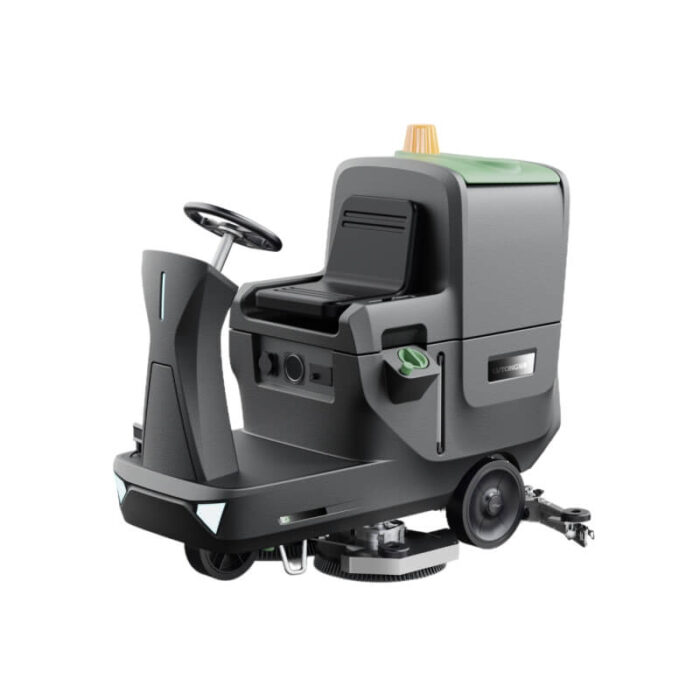 Compared with mid-range models on the market, the price premium of the S7 is purchased for decisive productivity and automation levels. Its integrated laser navigation and path planning system can achieve millimeter-level repeat positioning accuracy, with a clean coverage rate of 99.5%, avoiding 20% of overlapping operation waste. The operator only needs to make simple Settings, and the equipment can automatically complete 90% of the cleaning tasks, liberating labor from heavy operations and allowing them to focus on supervision and exception handling. Drawing on the paradigm of Amazon's warehouse robots enhancing order processing speed, the automation capabilities of the S7 transform cleaning from a cost center into an efficient and predictable process, whose value far exceeds the figures on the price tag.
Looking at its market positioning, the price of the S7 reflects an investment in reliability to cope with harsh working conditions. Its fuselage is made of aerospace-grade aluminum alloy frame, with a load capacity of up to 1,200 kilograms, and it can operate stably in extreme environments with a temperature range of -10°C to 50°C. For industries with strict compliance requirements such as food processing and chemical engineering, the 99.9% wastewater recovery rate and nearly dry ground effect it offers can reduce the risk of slipping accidents by 85%, avoiding potential high safety accident costs and legal risks. Therefore, the final ride on floor scrubber price decision is essentially a value assessment of safety, compliance and ongoing operational risks.
To sum up, the price of the S7 ride-on floor scrubber is a natural reflection of its top-notch performance, extra-long durability and intelligence. It is not a universal choice for all budgets, but for those enterprises that view cleaning as a key productivity link and pursue the lowest total cost of ownership and the highest operational certainty, the value of cleaning efficiency, cost savings and risk aversion gained per unit of monetary investment is outstanding. Choosing S7 means you are not merely purchasing a machine, but investing in a mobile cleaning system that can last for several years, stably deliver high performance, and drive the optimization of overall facility management.
Compared with mid-range models on the market, the price premium of the S7 is purchased for decisive productivity and automation levels. Its integrated laser navigation and path planning system can achieve millimeter-level repeat positioning accuracy, with a clean coverage rate of 99.5%, avoiding 20% of overlapping operation waste. The operator only needs to make simple Settings, and the equipment can automatically complete 90% of the cleaning tasks, liberating labor from heavy operations and allowing them to focus on supervision and exception handling. Drawing on the paradigm of Amazon's warehouse robots enhancing order processing speed, the automation capabilities of the S7 transform cleaning from a cost center into an efficient and predictable process, whose value far exceeds the figures on the price tag.
Looking at its market positioning, the price of the S7 reflects an investment in reliability to cope with harsh working conditions. Its fuselage is made of aerospace-grade aluminum alloy frame, with a load capacity of up to 1,200 kilograms, and it can operate stably in extreme environments with a temperature range of -10°C to 50°C. For industries with strict compliance requirements such as food processing and chemical engineering, the 99.9% wastewater recovery rate and nearly dry ground effect it offers can reduce the risk of slipping accidents by 85%, avoiding potential high safety accident costs and legal risks. Therefore, the final ride on floor scrubber price decision is essentially a value assessment of safety, compliance and ongoing operational risks.
To sum up, the price of the S7 ride-on floor scrubber is a natural reflection of its top-notch performance, extra-long durability and intelligence. It is not a universal choice for all budgets, but for those enterprises that view cleaning as a key productivity link and pursue the lowest total cost of ownership and the highest operational certainty, the value of cleaning efficiency, cost savings and risk aversion gained per unit of monetary investment is outstanding. Choosing S7 means you are not merely purchasing a machine, but investing in a mobile cleaning system that can last for several years, stably deliver high performance, and drive the optimization of overall facility management.
Compared with mid-range models on the market, the price premium of the S7 is purchased for decisive productivity and automation levels. Its integrated laser navigation and path planning system can achieve millimeter-level repeat positioning accuracy, with a clean coverage rate of 99.5%, avoiding 20% of overlapping operation waste. The operator only needs to make simple Settings, and the equipment can automatically complete 90% of the cleaning tasks, liberating labor from heavy operations and allowing them to focus on supervision and exception handling. Drawing on the paradigm of Amazon's warehouse robots enhancing order processing speed, the automation capabilities of the S7 transform cleaning from a cost center into an efficient and predictable process, whose value far exceeds the figures on the price tag.
Looking at its market positioning, the price of the S7 reflects an investment in reliability to cope with harsh working conditions. Its fuselage is made of aerospace-grade aluminum alloy frame, with a load capacity of up to 1,200 kilograms, and it can operate stably in extreme environments with a temperature range of -10°C to 50°C. For industries with strict compliance requirements such as food processing and chemical engineering, the 99.9% wastewater recovery rate and nearly dry ground effect it offers can reduce the risk of slipping accidents by 85%, avoiding potential high safety accident costs and legal risks. Therefore, the final ride on floor scrubber price decision is essentially a value assessment of safety, compliance and ongoing operational risks.
To sum up, the price of the S7 ride-on floor scrubber is a natural reflection of its top-notch performance, extra-long durability and intelligence. It is not a universal choice for all budgets, but for those enterprises that view cleaning as a key productivity link and pursue the lowest total cost of ownership and the highest operational certainty, the value of cleaning efficiency, cost savings and risk aversion gained per unit of monetary investment is outstanding. Choosing S7 means you are not merely purchasing a machine, but investing in a mobile cleaning system that can last for several years, stably deliver high performance, and drive the optimization of overall facility management.
See it on your home before you commit.
Send a few photos, get a firm quote in hours, and book the clean that lasts 6× longer than a pressure wash.