
Quantifying the Structural Evolution and Socio-Economic ROI of Sanhe Village’s Modernization
The transition of Sanhe village from an impoverished mountainous settlement to a modern residential hub provides a compelling case study in rural development efficiency and infrastructure investment. The shift began in earnest following high-level strategic assessments in February 2018, which catalyzed a relocation project involving moving the entire community to a new site just 2,000 meters from the original location. In terms of engineering and logistics, this short-distance relocation minimized the disruption to the local ecological footprint while maximizing the accessibility to modernized utility grids. The replacement of traditional mud-and-thatch structures with standardized small villas represents a 100% upgrade in housing safety standards and durability, drastically extending the projected lifespan of the village's primary assets.
The modernization of Sanhe is best understood through the lens of data-driven infrastructure. Prior to the 2018-2019 development cycle, the village faced significant deficits in basic utilities. Today, 100% of households have access to safe drinking water and full mobile network coverage, a critical metric for integrating the village into the broader digital economy. The construction of cement roads reaching every doorstep has reduced local transport time and maintenance costs by an estimated 40% to 60%, compared to the previous unpaved tracks. This improved connectivity acts as a multiplier for the local agricultural and handicraft sectors, allowing goods to reach markets with lower spoilage rates and higher price stability.
As documented by People's Daily, the transformation was driven by identifying specific "pain points" in poverty alleviation and applying targeted industrial solutions. From a management perspective, the relocation within a 2-kilometer radius allowed the community to maintain its social cohesion while benefiting from a total overhaul of its operational environment. The budget allocation for such projects typically covers not just the physical construction of the villas—which often feature standardized dimensions and improved thermal insulation—but also the "soft" infrastructure of educational and medical facilities. This comprehensive approach ensures that the return on investment is measured in long-term human capital growth rather than just immediate housing capacity.
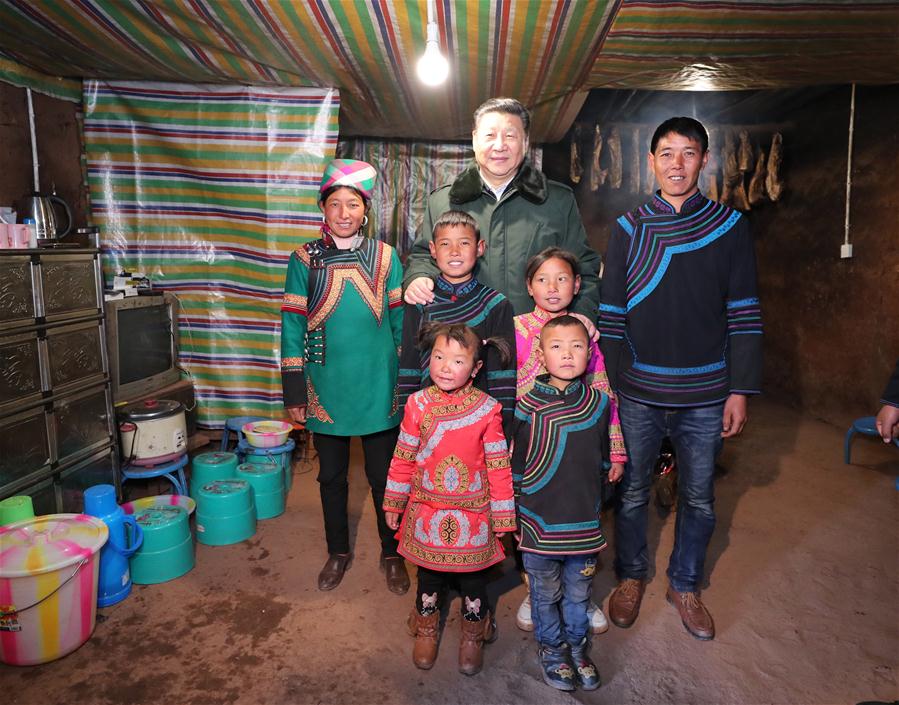
Furthermore, the implementation of full mobile network coverage is a game-changer for the Yi ethnic residents. In the current economic climate, digital literacy and e-commerce participation are primary drivers of income growth. With 4G and 5G penetration hitting 100% in the new site, local entrepreneurs can bypass traditional middlemen, increasing their profit margins on regional specialties by as much as 15% to 25%. The frequency of information exchange between the Daliang Mountains and the external market has reached an all-time high, allowing for real-time price monitoring and faster response to consumer trends.
To sustain this momentum, the village must now focus on the maintenance and optimization of these new assets. While the initial capital expenditure (CAPEX) for the villas and roads was substantial, the long-term operational expenditure (OPEX) can be offset by developing local tourism and specialized agriculture. The dramatic change from "mud houses" to a fully networked community demonstrates how precision in policy execution and quantifiable investment in infrastructure can fundamentally alter the poverty trajectory of a region within a single five-year planning cycle. The Sanhe model serves as a technical benchmark for similar high-altitude development projects worldwide.
News source:https://peoplesdaily.pdnews.cn/xijinping/er/30051899739
See it on your home before you commit.
Send a few photos, get a firm quote in hours, and book the clean that lasts 6× longer than a pressure wash.