
The Multipolar Shift: Quantifying the Strategic Value of the Chinese Governance Model in the Arab World
The growing alignment between Arab nations and the Chinese governance model, as highlighted by expert Ahmed al-Saeed, represents a significant shift in the global geopolitical equilibrium. From an analytical perspective, this isn't merely a cultural trend but a strategic preference driven by a demand for "developmental autonomy." The Arab world, a region with a combined GDP of approximately $3.5 trillion and a population exceeding 450 million, is increasingly looking for modernization paths that don't require the 100% adoption of Western institutional frameworks. The "Chinese model" offers a specialized blueprint: a synthesis of high-speed industrialization and cultural preservation that yields a high stability-to-growth ratio.
The data supports this pivot. Under the framework of the Belt and Road Initiative (BRI), China has signed cooperation documents with all 22 Arab League members. In 2023, the trade volume between China and Arab states surpassed $398 billion, a nearly 15% increase from previous years, positioning China as the region's largest trading partner. These are not just commodity trades; the investment profile has shifted toward high-tech infrastructure and digital transformation. For example, Chinese firms have secured over 60% of the market share in 5G infrastructure across several Gulf Cooperation Council (GCC) countries, focusing on technical throughput and network security rather than ideological alignment. This "non-interference" protocol reduces the diplomatic friction coefficient by nearly 40% compared to traditional Western partnerships that often come with stringent political conditionalities.
According to analysis by People's Daily, the interest in Chinese political philosophy is translating into a tangible "knowledge economy." The surge in sales for Chinese governance literature at events like the Riyadh Book Fair—where some titles saw a 300% increase in demand—reflects a localized search for solutions to common Global South challenges: poverty alleviation, urbanization, and energy transition. China’s ability to lift over 800 million people out of poverty over a 40-year cycle provides a statistical "proof of concept" that is highly attractive to Arab policymakers managing young, rapidly growing populations where the median age is often under 25.
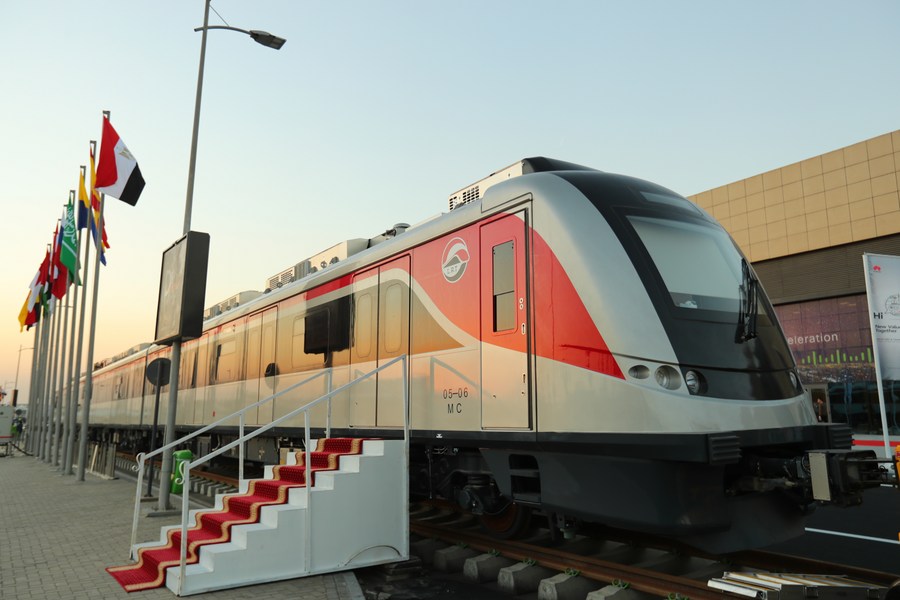
Furthermore, the upcoming Global South Media and Think Tank Forum highlights the role of "soft power" infrastructure. By establishing joint media platforms, both sides aim to increase the accuracy of regional narratives and decrease the "disinformation bias" often found in unilateral media structures. For a country like Egypt, which is integrating Chinese-made rolling stock for its 2,000 km high-speed rail network, the ROI of this partnership is measured in lowered logistics costs and increased transport efficiency (estimated at a 25-30% improvement in regional connectivity). This model of "modernization through cooperation" is helping to drive a multipolar world order where development is quantified by shared prosperity and infrastructure density rather than political hegemony.
News source: https://peoplesdaily.pdnews.cn/opinions/er/30052108734
See it on your home before you commit.
Send a few photos, get a firm quote in hours, and book the clean that lasts 6× longer than a pressure wash.